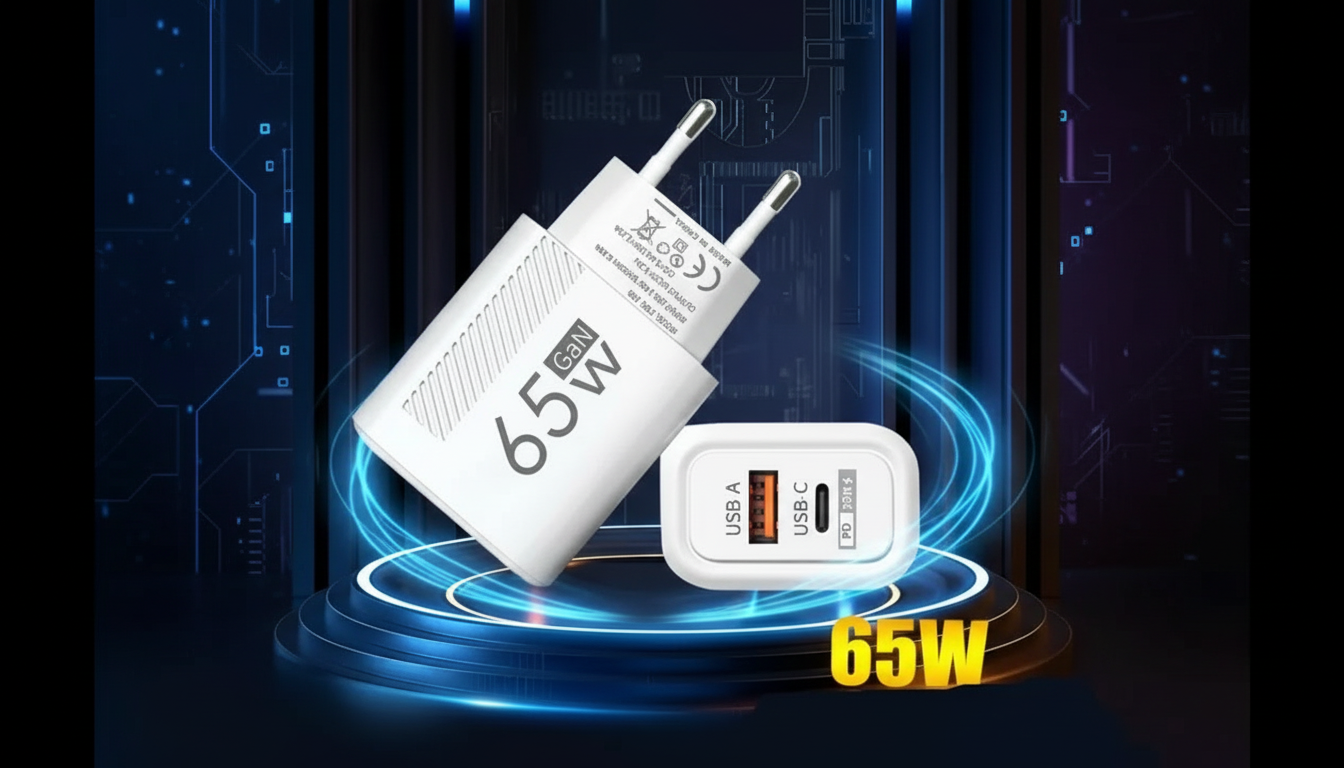
In most cases, yes—GaN chargers are designed to support USB Power Delivery (PD) charging, especially models that use USB-C ports. PD is the standard that lets a charger and device negotiate the right voltage and current (like 5V, 9V, 15V, or 20V) for faster, safer charging. If the charger is labeled “PD,” “USB-C PD,” or lists PD wattage (such as 30W, 45W, 65W, or 100W), it supports PD charging.
GaN is the charging technology inside the adapter, but PD support depends on the charger’s USB-C controller and its advertised protocols. To verify PD, check:
Basic PD handles set voltage “steps.” PD PPS (Programmable Power Supply) allows finer voltage adjustments, which can improve efficiency and heat control on supported Samsung and other Android devices. A GaN charger can support PD without PPS, but PPS is a nice upgrade if your phone specifically benefits from it.
PD support alone doesn’t guarantee maximum speed—the charger must also supply enough wattage for your device. Phones commonly peak between 18W–45W, tablets often use 30W–45W, and many laptops need 45W–100W. A 65W GaN PD charger is a popular sweet spot for charging a laptop plus a phone (depending on port-sharing rules).
For a deeper breakdown of PD, Quick Charge, port combinations, and what to look for on a 65W GaN model, see the full guide here: https://majorane.com/guide-65w-gan-usb-c-charger-quick-charge-pd-guide/.
USB-C Power Delivery (PD) is a universal standard primarily used over USB-C and commonly supports tablets and laptops. Quick Charge (QC) is a Qualcomm technology often found on USB-A ports and some USB-C ports, mainly targeting compatible Android phones.



Leave a comment