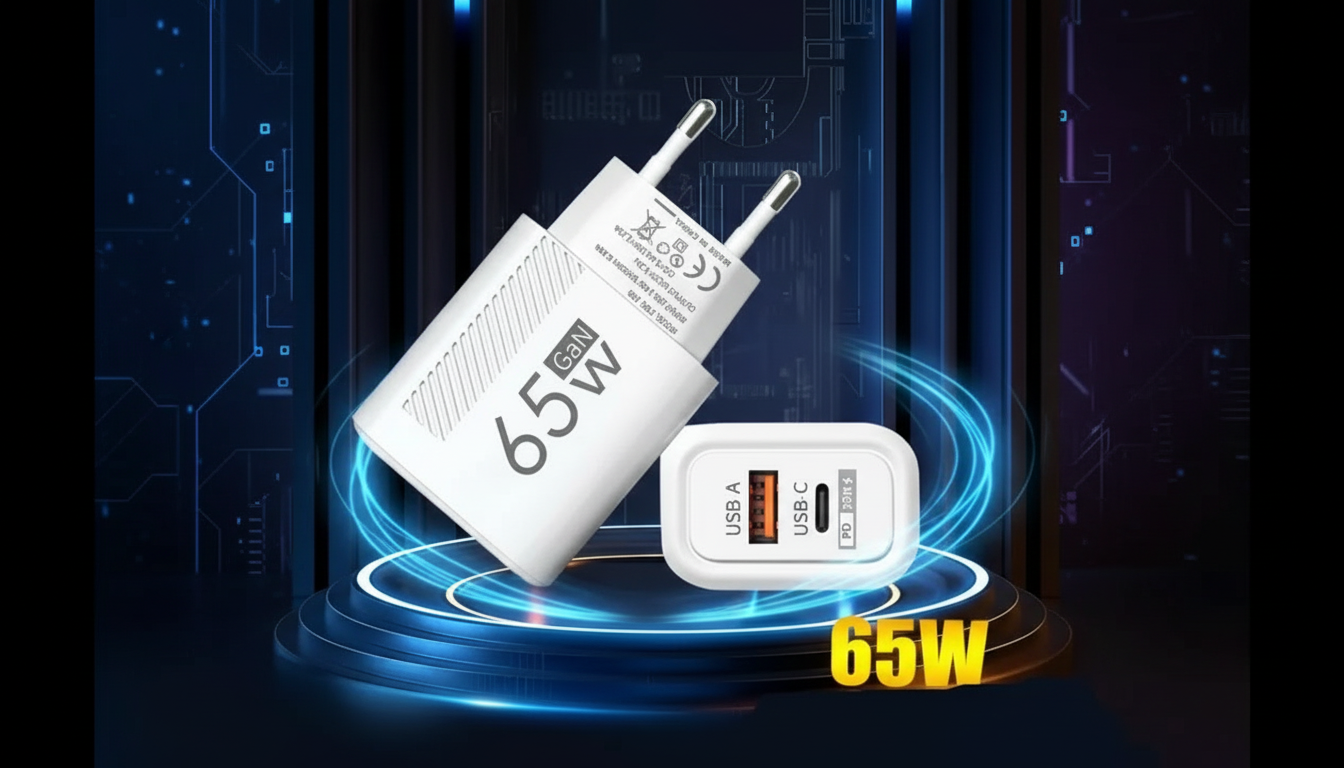
To actually pull the full 65W from a USB-C wall charger, you need a USB-C to USB-C cable that’s rated for the power level and supports USB Power Delivery (USB PD). The safest pick is a cable labeled 100W (20V/5A) that includes an E-marker chip. That chip lets the charger and your device negotiate higher current safely; without it, many cables top out at 3A (often 60W max at 20V) even if the charger can do more.
If your setup is strictly 65W, a quality 3A USB-C to USB-C cable can still work in some cases (for example, where the charger and device use 20V/3.25A or 20V/3A profiles). But because charger/device combinations vary by PD profile, a 5A E-marked cable avoids the common “why am I only getting 45–60W?” situation and leaves headroom for future devices.
The biggest issues are using a USB-A cable, grabbing an older “charge-only” USB-C cable with no E-marker, or relying on a cable bundled with a low-power device. Also note that some cables advertise high wattage but don’t specify 5A/E-marker details—when in doubt, choose a certified or well-reviewed 100W USB-C cable.
For a deeper breakdown of how 65W USB-C chargers negotiate power (and why real-world results can differ), see the full guide here: https://majorane.com/guide-65w-gan-usb-c-charger-quick-charge-pd-guide/.
Yes. Longer or lower-quality cables can increase resistance, causing voltage drop and heat, which may lead a device to charge at a lower wattage. A shorter, well-made 5A USB-C cable is the most reliable choice for high-power charging.



Leave a comment