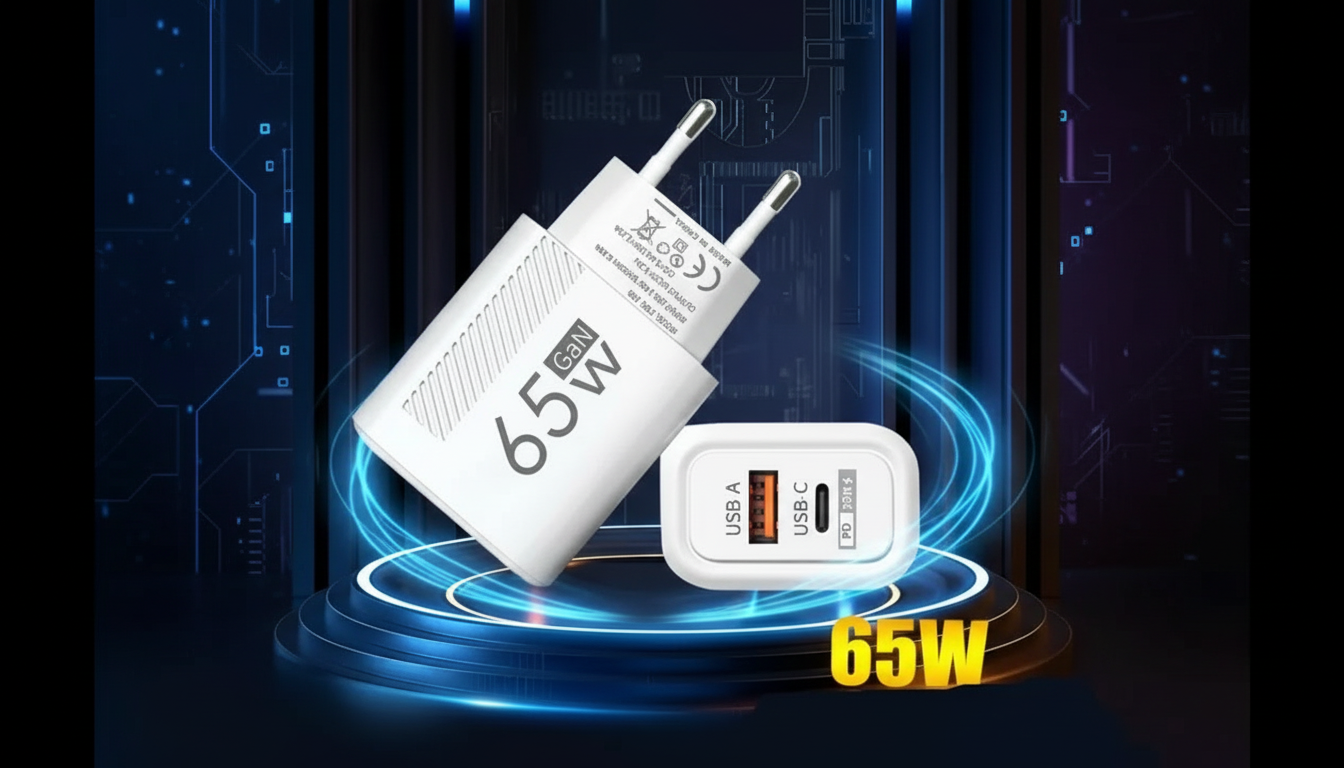
On a GaN USB-C wall charger, “65W” is the maximum total power the charger can deliver under the right conditions. Watts are a measure of power (volts × amps). So a 65W charger can, for example, supply up to about 20V/3.25A to a single compatible device using USB Power Delivery (USB-C PD). That’s enough for many ultraportable laptops, tablets, handheld gaming devices, and fast-charging phones.
GaN (gallium nitride) doesn’t change the wattage rating by itself—65W is still 65W—but GaN designs often run more efficiently, which helps manufacturers build smaller chargers that stay cooler than similarly rated older silicon designs.
When a charger has multiple ports, 65W is usually the combined ceiling across all ports, not “65W per port.” The charger’s internal power budget is split based on which ports are in use, which charging standards your devices request, and the charger’s fixed “power profiles” (sometimes called port allocation rules).
Common real-world behavior looks like this:
Also note that plugging in or unplugging a device can trigger a brief renegotiation of power (a momentary pause is normal) because USB-C PD handshakes again to rebalance wattage.
For a deeper breakdown of 65W GaN chargers, USB-C PD profiles, and what to expect from multi-port setups, see the complete guide: https://majorane.com/guide-65w-gan-usb-c-charger-quick-charge-pd-guide/.
No. With USB-C Power Delivery, the phone only draws the power it’s designed to accept, and the charger supplies an appropriate voltage/current after negotiation.



Leave a comment