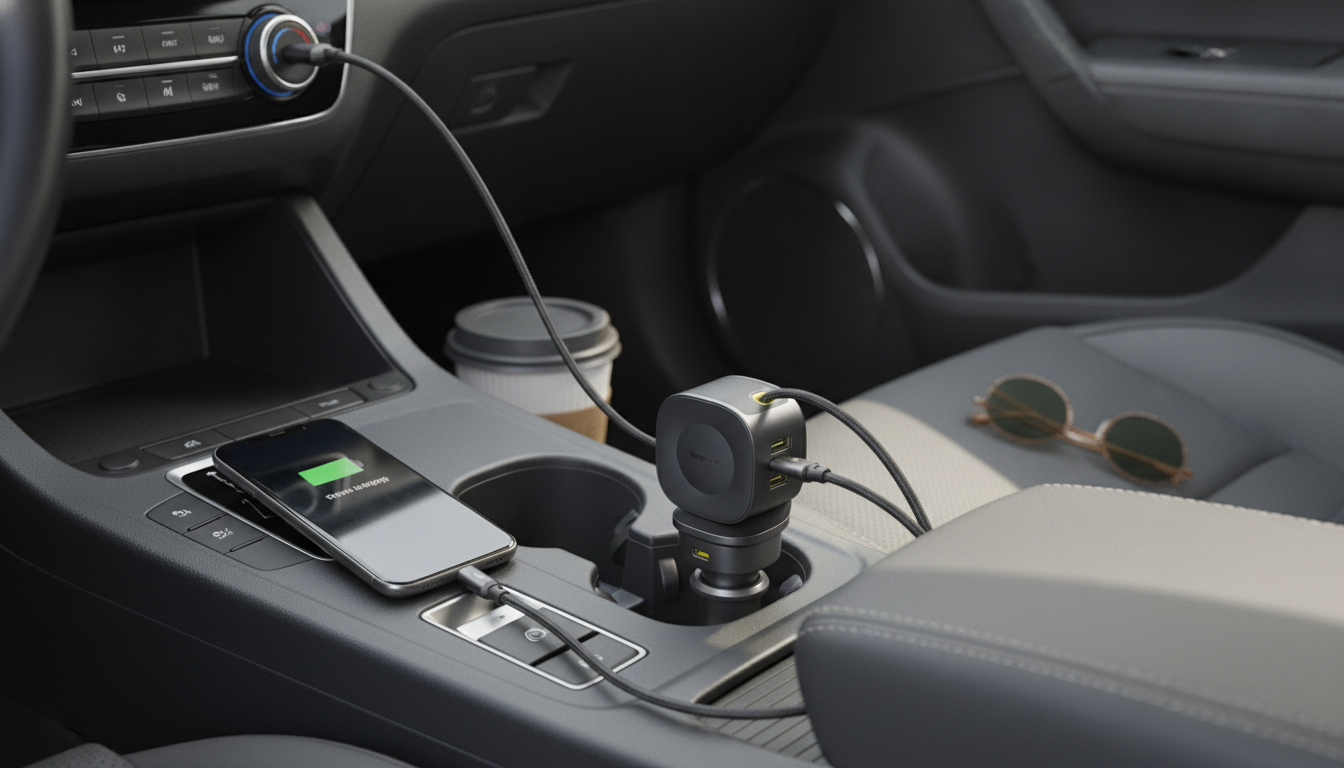
In most cases, yes—provided the charger is explicitly rated for a wide input range such as DC 12–24V (often listed as 12V/24V compatible). That’s the key spec that determines whether a 240W multi-port car charger can be used safely in both standard passenger cars (typically 12V systems) and many trucks, commercial vehicles, and some RV setups (often 24V systems).
A car charger doesn’t “push” 240W all the time. Instead, it takes the vehicle’s DC input and converts it into regulated outputs (like USB-C Power Delivery) while negotiating power with each connected device. If the charger supports 12–24V input, it can handle the higher voltage of a 24V electrical system and still deliver the correct USB output voltages (5V/9V/12V/15V/20V, depending on the port and device).
1) Input rating on the charger: Look for something like “Input: DC 12–24V.” If it only lists 12V, don’t use it in a 24V socket.
2) Plug and socket fit: Most use the standard cigarette-lighter style plug, but some heavy-duty vehicles may have different socket depths or tighter tolerances.
3) Realistic power expectations: “240W” is usually a combined maximum across ports, not per-port. A laptop and phone charging together may share the budget depending on the charger’s power allocation.
4) Heat management: High output in a confined cabin can run warm. Use quality cables and avoid burying the charger under clutter.
For a deeper breakdown of how a 240W multi-port model is designed, including port layout, retractable cable considerations, and practical charging scenarios, see the main guide: 240W 4-Port USB-C Car Charger Guide.
Check the printed specifications on the charger body or packaging for an input range such as “DC 12–24V.” If it only shows 12V (or doesn’t list input voltage at all), it’s not safe to assume 24V compatibility.



Leave a comment