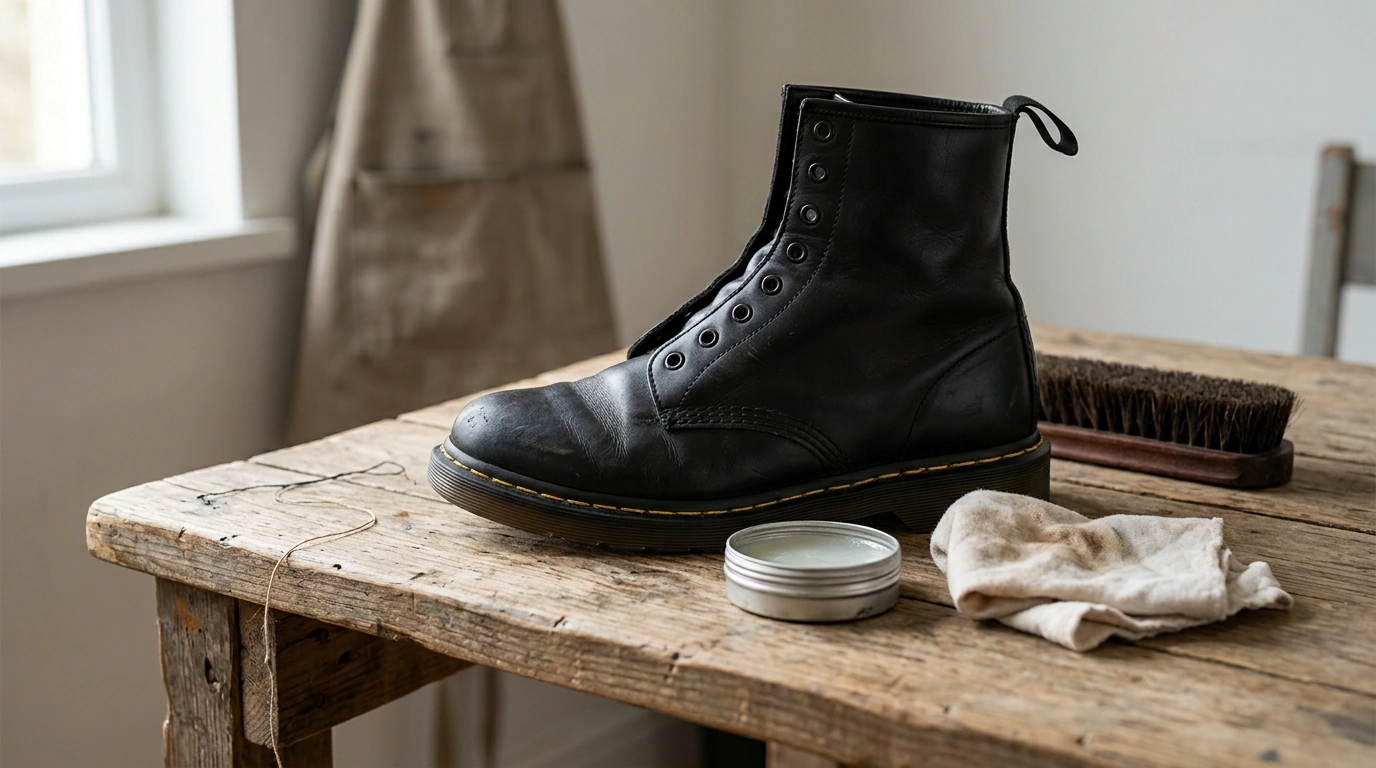
To keep black leather Dr. Martens boots from cracking, focus on gentle cleaning, light conditioning, and proper drying. Cracks usually come from dried-out leather, harsh cleaners, or heat that pulls moisture and oils out of the hide.
Take out the laces and brush the boots with a soft horsehair brush or clean microfiber cloth, paying attention to the welt and creases. If there’s stuck-on grime, use a slightly damp cloth—avoid soaking the leather.
Use a small amount of saddle soap or a dedicated leather cleaner on a damp cloth, working in light circles. Wipe off residue with a clean, barely damp cloth, then buff dry. Avoid alcohol wipes, dish soap, and heavy degreasers; they strip oils and speed up cracking.
Air-dry at room temperature, away from radiators, vents, and direct sun. Stuff the boots with paper (or use shoe trees) to hold the shape while drying and to reduce deep creasing that can turn into cracks.
Once the boots are fully dry, apply a thin layer of conditioner (or a leather balm) with a soft cloth, focusing on flex points: the toe bend and ankle. Let it absorb for 10–20 minutes, then buff to an even finish. Over-conditioning can leave leather too soft and attract dirt, so a light coat is better than a heavy one.
If you want extra protection and a deeper black finish, use a neutral or black polish after conditioning. Buff well so the surface isn’t tacky, which can trap grit.
For more guidance on wearing, breaking in, and caring for women’s black leather round-toe Docs, visit this Dr. Martens boots guide.
Condition every 4–8 weeks with regular wear, and sooner if the leather looks dull, feels dry, or starts showing fine lines at the creases. If you rarely wear them, conditioning every couple of months is usually enough.







Leave a comment