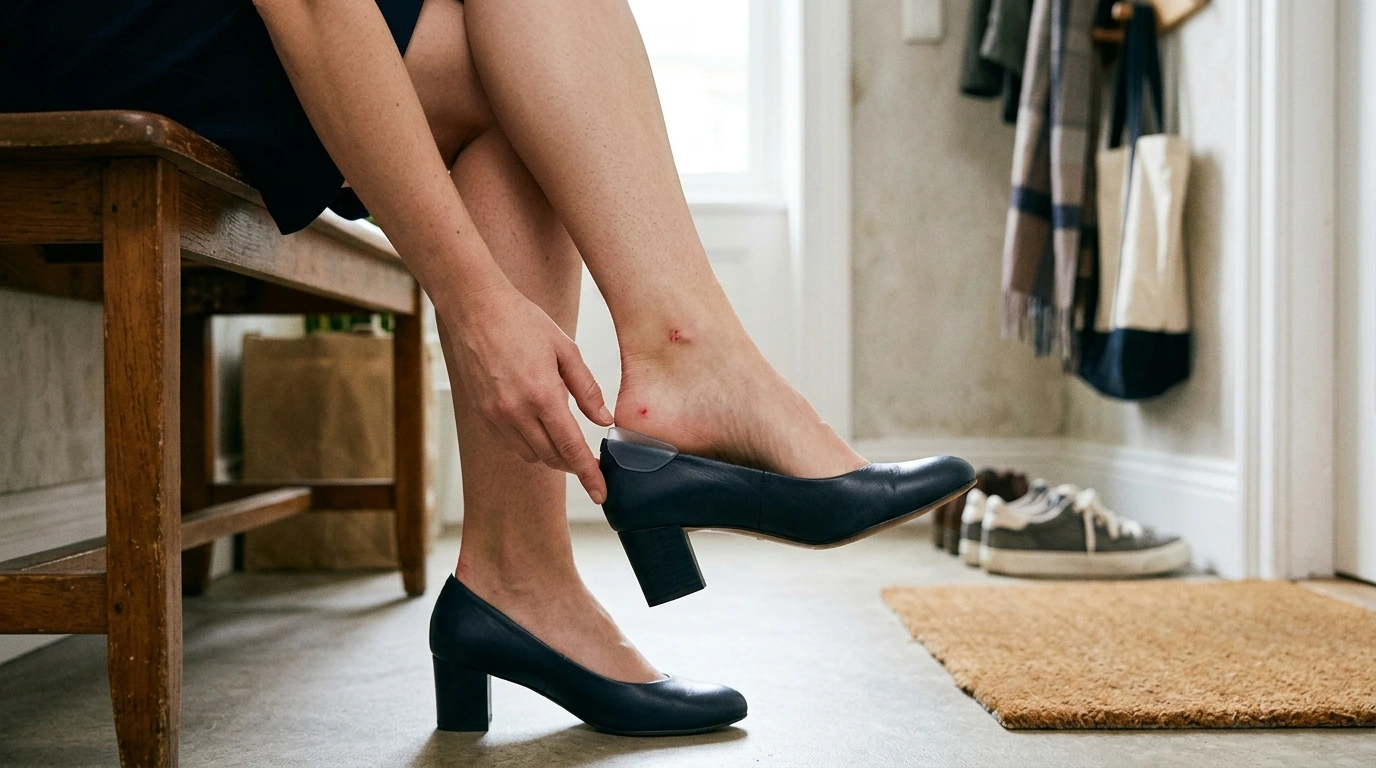
Heel slippage in leather pumps usually comes down to a small fit mismatch, a slick interior lining, or new leather that hasn’t softened and molded to your foot yet. The good news: a few quick adjustments can stop the “walk-and-slip” feeling and prevent painful rubbing on the back of your heel.
Start with cushioned heel grips (also called heel liners). They fill the extra space at the back of the shoe and create friction so your heel stays seated. Place them slightly higher than the spot that’s rubbing—too low can create a ridge that still blisters.
If your pumps feel a touch long or your foot slides forward, a thin insole or ball-of-foot pad can stabilize your step and reduce heel lift. Choose low-profile options designed for heels so you don’t crowd your toes.
Slick hosiery can make leather pumps slip more. Try a grippier no-show sock, or go bare with a light dusting of foot powder to cut moisture. If you’re prone to blisters, apply an anti-friction balm where the shoe hits the back of your heel before you head out.
Wear the pumps at home in short intervals so the leather gradually relaxes. If the back is stiff, a cobbler can soften and shape the heel counter safely—often a better option than forcing a too-tight fit.
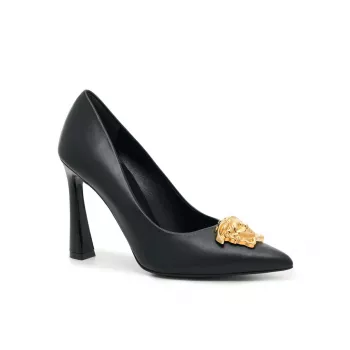
If you’re sizing up to relieve toe pressure, you may be creating heel slip. A better match is the correct length with a slightly wider width, or a style with a more secure topline. For style, fit, and care tips specific to designer leather pumps, see the full guide: https://majorane.com/guide-versace-logo-plaque-leather-pumps-fit-style-care/.
Use an anti-friction balm on hot spots, add cushioned heel liners, and break the shoes in with short wears. If rubbing persists in one area, cover it with a blister bandage before putting the shoes on.



Leave a comment