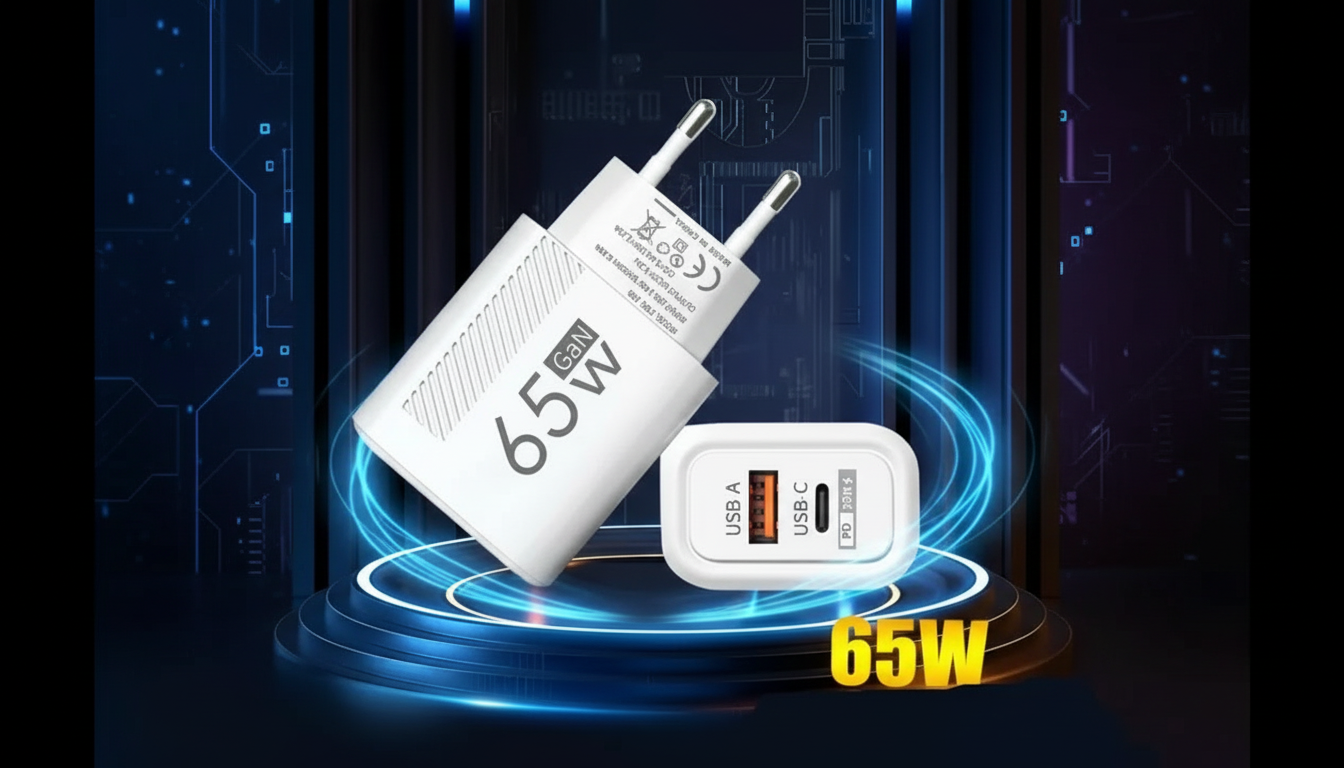
Many 65W GaN chargers support USB-C Power Delivery (PD), and some also support Qualcomm Quick Charge (QC)—but the exact mix depends on the model and its ports. In practice, PD is the most important standard to look for on a USB-C port, since it’s the common “language” used by modern laptops, tablets, handheld gaming devices, and most newer Android phones. QC matters most when you’re charging certain Android phones (typically via USB-A, or via USB-C if the phone and charger both support QC over USB-C).
USB-C PD negotiates voltage/current profiles between the charger and device (such as 5V, 9V, 12V, 15V, and 20V). A 65W PD charger can often deliver up to 20V/3.25A on a single port, which is why it can run or fast-charge many USB-C laptops. If you plug in a lower-power device, it simply requests a lower profile—so PD is flexible and widely compatible.
Quick Charge is Qualcomm’s fast-charging family, most common on Android phones and many USB-A fast-charging ports. QC also negotiates higher voltages for faster charging, but it’s less universal than PD and doesn’t cover the laptop ecosystem the way USB-C PD does. If your phone prefers QC and the charger supports it, you’ll typically see faster charging than basic 5V charging—especially with a good cable.
PD usually decides whether a 65W GaN charger can properly charge a USB-C laptop at full speed. QC is more about maximizing speed for certain phones, especially when using USB-A. For mixed-device households, a charger with PD on USB-C (and optional QC on USB-A) tends to feel the most seamless.
For deeper compatibility tips and port-by-port expectations, see the full guide: https://majorane.com/guide-65w-gan-usb-c-charger-quick-charge-pd-guide/.
Often yes, but total power is shared when multiple ports are used. Many 65W multi-port chargers reduce the laptop port’s wattage when a second device is plugged in, which can slow laptop charging under heavy use.



Leave a comment