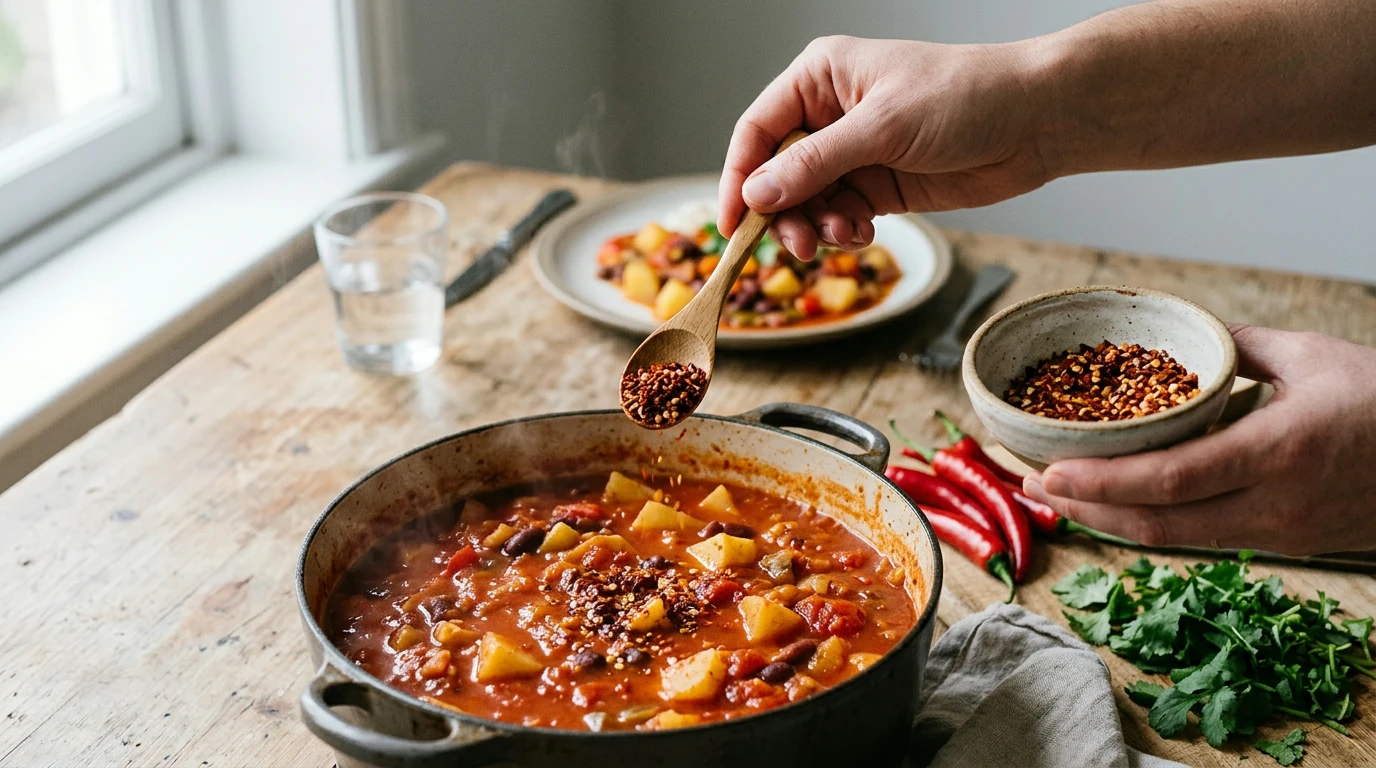
Most quick comfort food bundles lean mild by default, with heat treated as optional. That approach keeps weeknight dinners family-friendly while still letting spice-lovers customize at the table. In practice, you can expect cozy flavors built on aromatics (onion, garlic), herbs, savory broths, and creamy or tomato-based sauces—more “warming” than “hot.”
If a recipe includes spice, it’s usually in small, controllable amounts: a pinch of red pepper flakes, a dash of hot sauce, a spoonful of salsa, or a mild chili powder blend. The goal is balance and comfort, not lingering burn. For households with mixed preferences, this style makes it easy to cook one base meal and adjust heat in individual bowls.
Start with “no-heat” builds: sauté aromatics, add herbs, and use umami boosters like Parmesan, soy sauce, or a squeeze of lemon at the end. If a recipe calls for cayenne or pepper flakes, reduce to a tiny pinch or skip entirely. When using jarred sauces, choose “mild” labels and add acidity (vinegar or citrus) for brightness instead of heat.
Use add-ons that won’t disrupt cook time: chili crisp, red pepper flakes, diced jalapeños, or a few shakes of your favorite hot sauce. For deeper heat, bloom spices (chili powder, smoked paprika, cayenne) in oil for 30 seconds before adding liquids. You can also finish with peppery garnishes like sliced serranos or a spicy salsa.
For a flexible, weeknight-friendly framework—plus tips that help you adjust flavors quickly—see the full guide here: 30-Minute Comfort Dinner Toolkit for Busy Weeknights.
For Spice Level Guide: Quick Comfort Food Bundles, the best answer depends on fit, material, care instructions, and how the product will be used day to day.
Keep quick-cook carbs (pasta, rice), canned tomatoes/beans, broths, and a few sauces (soy sauce, pesto, salsa) on hand. Add freezer basics like peas, spinach, and pre-cooked proteins to turn those staples into a full meal in minutes.





Leave a comment