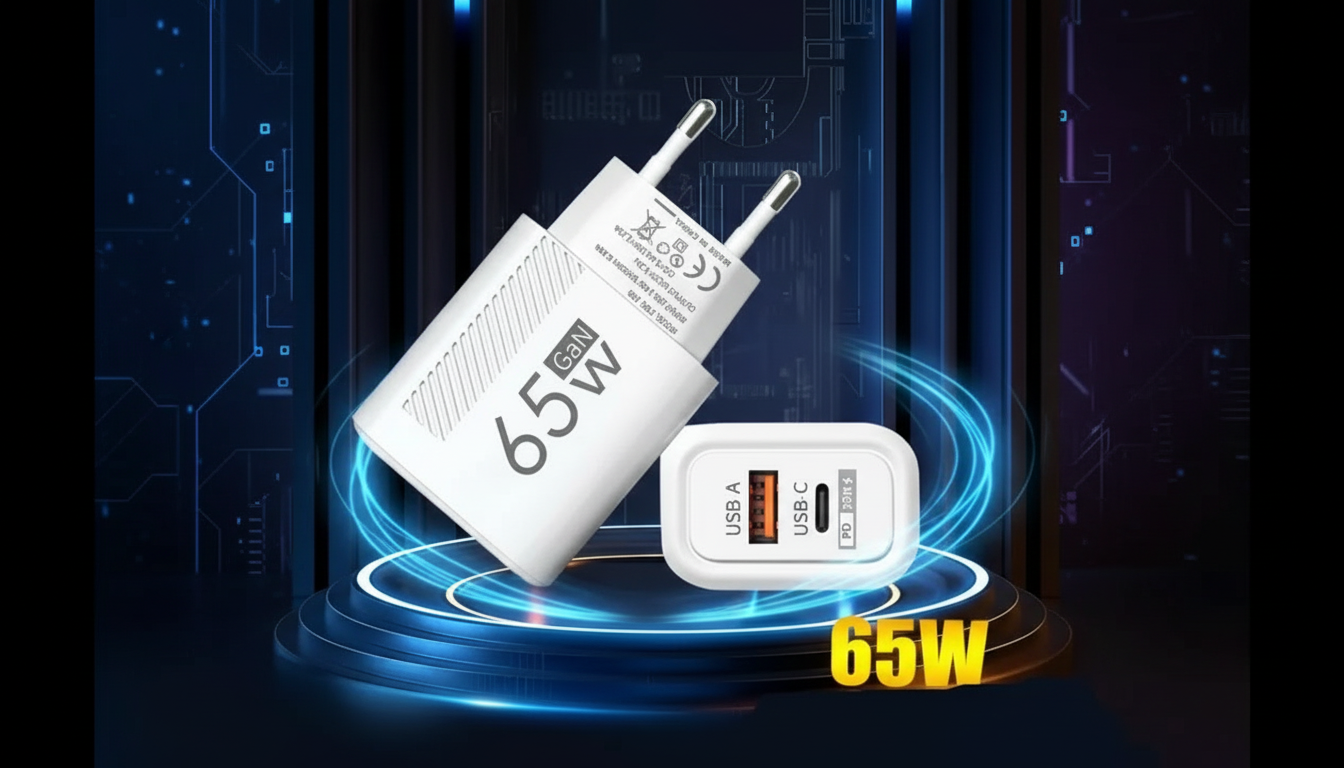
A GaN charger is special because it uses gallium nitride (GaN) instead of traditional silicon to convert power more efficiently. That efficiency means less wasted energy as heat, which enables a smaller charger body without sacrificing speed or safety.
GaN components can switch power faster and with less loss than silicon, so manufacturers can shrink internal parts like transformers and heat sinks. The result is a compact wall charger that can still deliver high wattage—often enough to power a laptop and fast-charge a phone from the same brick (depending on ports and total output).
Because GaN wastes less energy as heat, many GaN chargers run cooler under similar loads. Lower heat can improve comfort in everyday use and may help with long-term reliability, especially when charging at higher wattages for extended periods.
Most modern GaN chargers are built around USB-C Power Delivery (USB PD), and many also support common fast-charge profiles used by phones, tablets, and handhelds. That makes a single charger more “universal” for travel or desk setups—just match the charger’s wattage and port types to what your devices require.
Multi-port GaN chargers often include dynamic power allocation, which automatically splits wattage between ports based on what you plug in. This can be convenient for charging a laptop plus accessories, though each port’s maximum output can change when you add or remove devices.
For a deeper breakdown of wattage, USB-C PD profiles, and what to look for in a 65W model, see the full guide here: https://majorane.com/guide-65w-gan-usb-c-charger-quick-charge-pd-guide/.
Not typically. GaN designs can run more efficiently and with less heat, which is favorable for longevity, but overall lifespan still depends on build quality, thermal design, and how hard the charger is pushed day to day.



Leave a comment