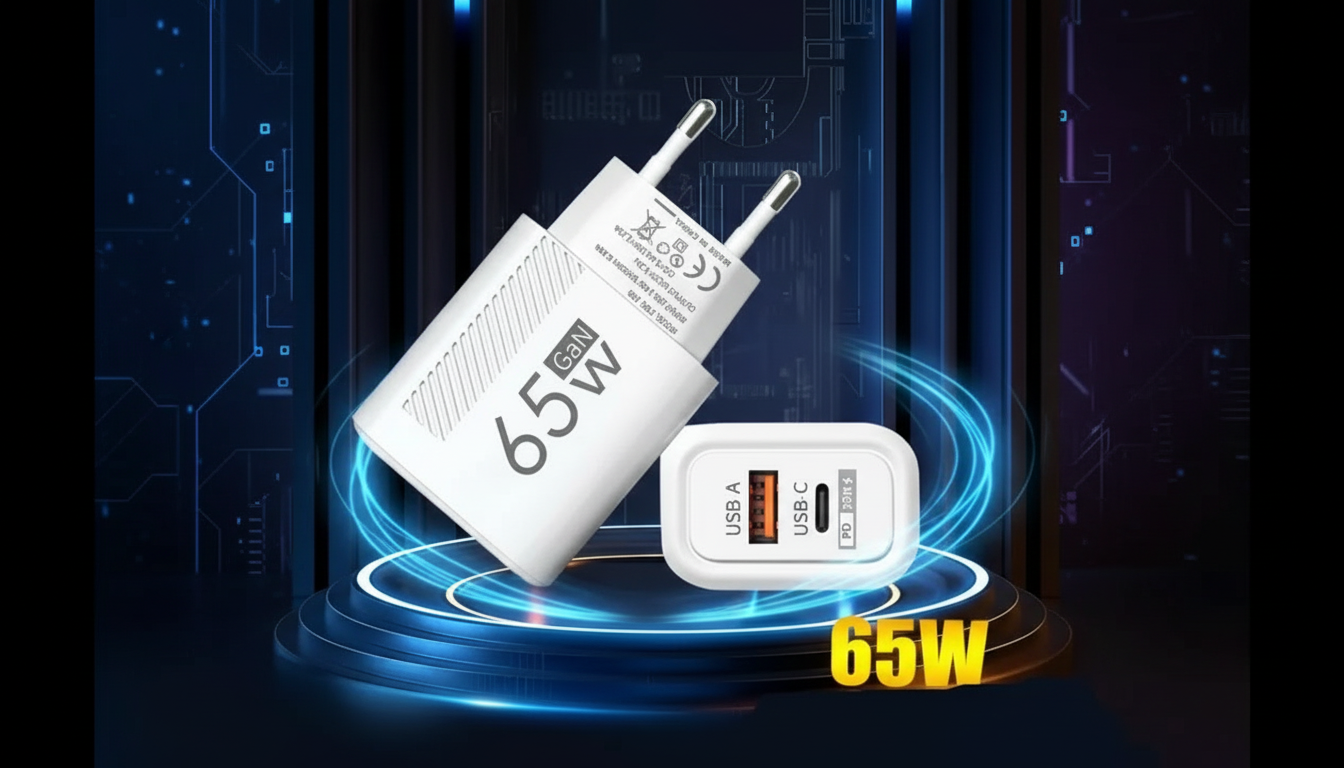
A 65W GaN USB-C wall charger can deliver plenty of power, but your phone will only “fast charge” if the phone, charger, cable, and port all agree on the same fast-charging standard and power profile. If any part of that chain doesn’t match, charging typically falls back to a slower (but safe) baseline.
Many phones fast charge best on USB Power Delivery (USB-PD), while others rely on brand-specific systems (like certain proprietary modes). Even with a 65W charger, a phone that tops out at 18W–27W (or only supports a specific protocol) won’t suddenly charge at 65W.
Some USB-C cables are “charge-only,” some are limited to 3A, and only certain cables reliably support higher power levels or the signaling needed for fast charge negotiation. A worn cable, loose connector, or cheap unmarked cable can also cause the charger to reduce power to prevent overheating.
On multi-port GaN chargers, only certain ports may support the highest USB-PD output. When you plug in a second device, many chargers automatically redistribute wattage, which can drop your phone from fast charging to standard charging.
Phones throttle charging when the battery is hot, the ambient temperature is high, or the battery is near full. Battery protection features (optimized charging, charging limits, or “slow charging” modes) can also cap speed even with a powerful charger.
Some phones only show “Fast charging” under specific conditions, while others don’t display the label at all. If you want a deeper breakdown of USB-PD, ports, wattage sharing, and what a 65W GaN charger can realistically do, visit this 65W GaN USB-C charger guide.
Yes. A low-quality or low-rated cable can limit current, fail fast-charge negotiation, or cause voltage drop, all of which reduce charging speed. Using a reputable USB-C cable rated for higher wattage often fixes inconsistent fast charging.



Leave a comment