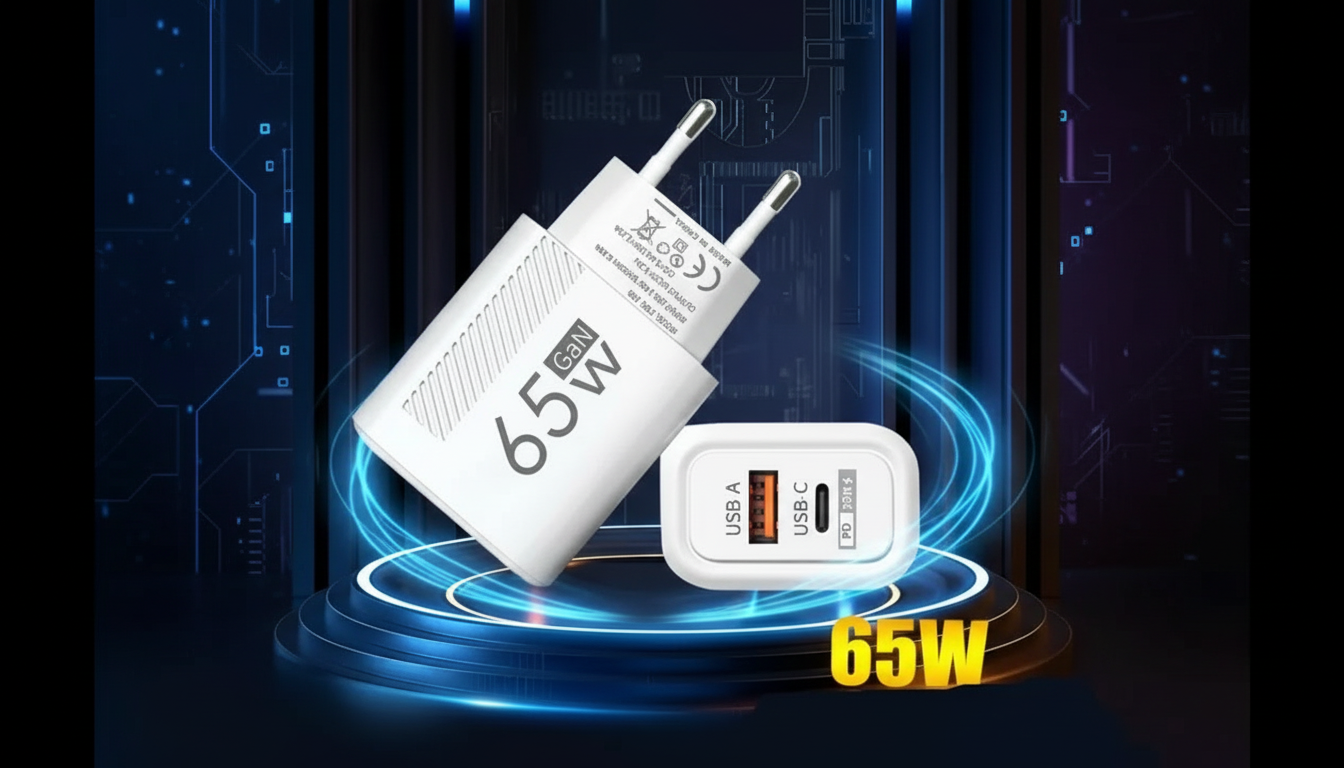
Usually, yes—if your laptop supports USB-C Power Delivery (USB-PD) charging. A 65W USB-C PD charger can deliver enough power to “fast charge” many mainstream laptops, especially ultraportables, by providing higher voltage and current than basic 18W–30W phone chargers.
Most MacBook Air models and smaller MacBook Pro configurations can charge quickly on a 65W PD charger, including while you’re using the laptop. Larger MacBook Pro models (especially 15-inch/16-inch) may still charge, but they can charge more slowly under heavy workloads because they often ship with higher-wattage adapters.
Many Windows ultrabooks are designed around 45W–65W USB-PD, so 65W typically delivers full-speed charging. Gaming laptops and performance machines frequently require 90W–140W+ (and sometimes proprietary charging), so a 65W charger may only maintain battery level or charge slowly when the system is drawing lots of power.
Most modern Chromebooks that charge over USB-C use USB-PD and fall in the 30W–65W range. That means a 65W PD charger is often ideal—providing ample power for charging and running the device at the same time.
Look for “USB-C Power Delivery” support on your laptop, then compare your laptop’s recommended charger wattage to 65W. Also use a quality USB-C cable rated for laptop charging (a 100W-rated cable is a safe pick) to avoid power limits.
For deeper details on wattage, PD profiles, and what to expect from a 65W GaN charger, see the full guide: https://majorane.com/guide-65w-gan-usb-c-charger-quick-charge-pd-guide/.
It’s best to use a high-quality USB-C to USB-C cable rated for 100W (5A) so the charger and laptop can negotiate full power safely. Lower-rated cables may limit charging speed or cause unreliable charging.



Leave a comment