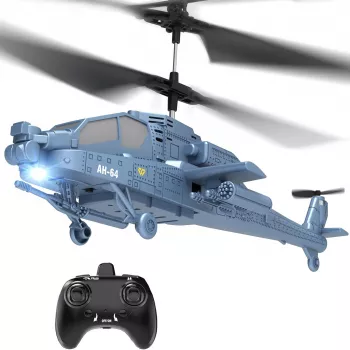
A first RC helicopter is more fun when it feels sturdy, responds predictably, and doesn’t turn every tip-over into a teardown. This fall‑proof Apache‑style helicopter model focuses on kid-friendly handling and 2.4G control so beginners can practice hovering, turns, and smooth landings with less stress. It’s a playful way to build coordination and confidence—one short, steady flight at a time.
Early RC practice is full of small surprises: over-correcting the sticks, clipping a chair leg, or landing a little too fast. A kid-friendly helicopter helps those learning moments feel manageable instead of frustrating.
For first-time flyers, indoors can be the easiest way to control variables. Choose a clear room, move fragile decor, and keep ceiling fans off. Start with light throttle and practice a hover just a foot or two above the ground—low height makes “oops” landings less dramatic.
Outdoor flights can be a blast, but small helicopters are easily pushed around. Pick a wide open area away from crowds, trees, and power lines, and fly only when conditions are calm. Maintain line of sight and keep the helicopter at a comfortable distance so corrections stay quick and smooth.
Even light wind can overpower a lightweight RC helicopter. If the helicopter drifts faster than you can comfortably correct, pause and move to a calmer area (or bring practice back indoors).
A consistent routine helps beginners progress faster because the helicopter behaves more predictably from session to session. These small habits also reduce pairing issues and prevent avoidable wear.
If you’re shopping for a gift or choosing a first helicopter for a new RC fan, a quick spec-style summary makes it easier to compare options without overthinking it.
| Detail | What to Expect |
|---|---|
| Product type | Remote control helicopter model toy |
| Style | Apache helicopter design |
| Control frequency | 2.4G |
| Durability focus | Fall‑proof (designed to better handle bumps and drops) |
| Recommended use | Beginner flying practice with adult supervision |
RC helicopters are exciting because they move fast and feel “real.” That’s also why a few simple rules matter, especially for younger kids.
For more general toy safety reminders, the Consumer Product Safety Commission has helpful guidance at CPSC Toy Safety. If flying outdoors, review recreational flyer safety basics from the FAA.
A few minutes of care after each session can prevent most “mystery problems” that show up later—like drifting, vibration, or inconsistent response.
For the current price, availability, and what’s included in the box, check the product listing here: Fall‑Proof Remote Control Apache Helicopter for Kids – 2.4G Helicopter Model Toy.
For families planning a gift, short sessions usually work best—beginners often improve most after several quick flights rather than one long attempt. If you like having a versatile charger around the house for everyday devices, this option is also available: 65W GaN USB C Fast Wall Charger with Quick Charge.
“Fall‑proof” generally means it’s designed to better tolerate common bumps and short drops during learning, but it isn’t unbreakable. After any crash, do a quick inspection of the rotors and body before flying again, and keep practice low and calm while skills build.
Many 2.4G systems are made to reduce interference so several toys can often run together. For best results, power on and pair one at a time, and keep some spacing between active RC toys.
Beginners often do best indoors first in a clear room to practice hovering and gentle turns. Outdoor flights are great when wind is calm and there’s a wide open space away from obstacles and crowds.



Leave a comment