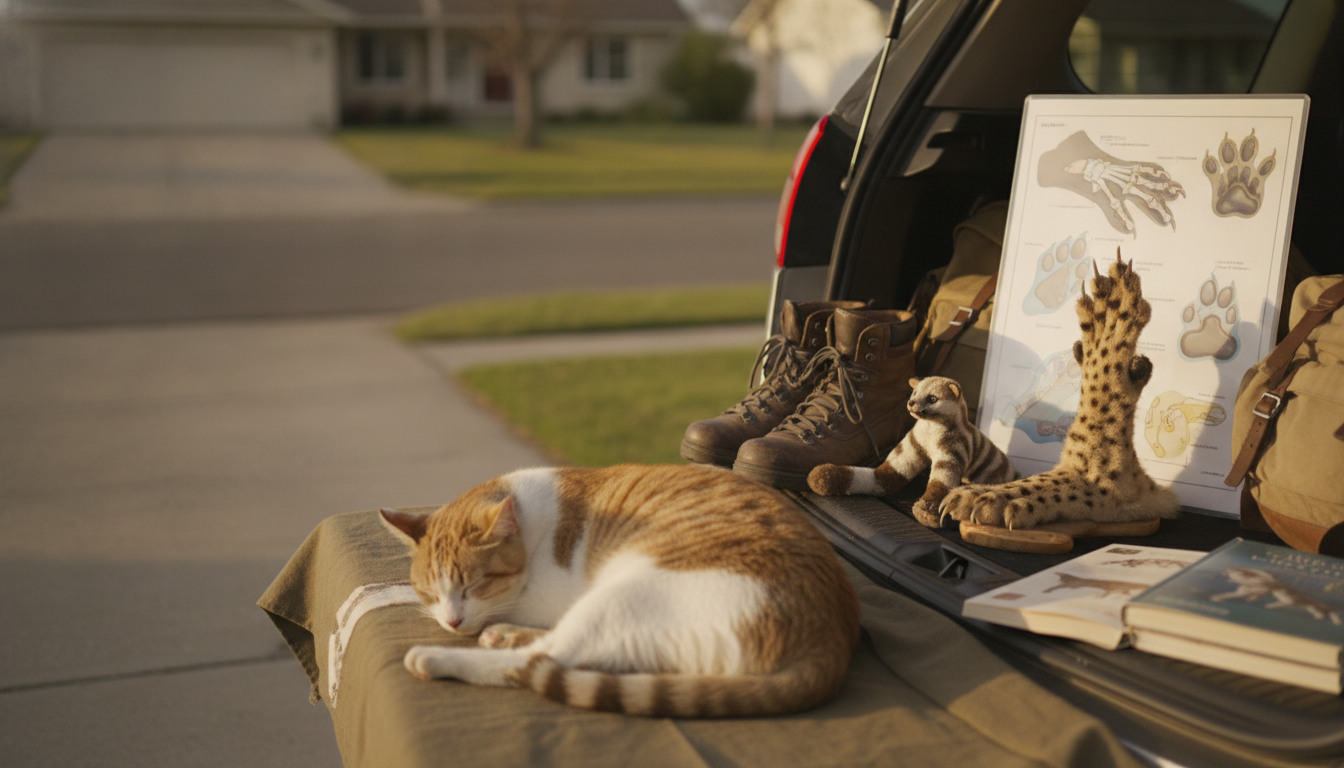
No. Cats are the most familiar example, but they aren’t the only animals with retractable claws. Several other mammals have claws that can be pulled back (fully or partially) to protect the claw and keep it sharp for hunting, climbing, or gripping.
Many members of the cat family (like lions, tigers, leopards, and bobcats) have strongly retractable claws. Beyond big cats, some other mammals have claws that retract to varying degrees. For example, several civet and genet species can retract their claws partially, and some mustelids (such as certain otters) show limited retraction depending on the species and the way their toes and tendons are structured.
Not all. Most cats have retractable claws, but cheetahs are the well-known exception: their claws are only semi-retractable. That adaptation helps with traction and stability during high-speed chases, functioning a bit like built-in running spikes.
Retractable claws are great for stealth and precision. When a claw stays sheathed, it’s less likely to wear down on hard ground, which keeps it sharp for climbing and catching prey. It can also make an animal’s steps quieter, an advantage for stalking.
Because house cats keep their claws protected most of the time, nails can stay sharp and may snag fabrics or scratch surfaces during play. Tools that cover or protect items from claw contact can be helpful when traveling or storing accessories. For a cat-themed option, see the details on the cat paw Switch 2 travel case guide.
For Retractable Claws: Cats, Cheetahs, Civets & More, the best answer depends on fit, material, care instructions, and how the product will be used day to day.
Retractable claws can be pulled back into a sheath or held off the ground, reducing wear and helping keep them sharp. Non-retractable claws stay extended and are more likely to blunt over time from contact with the ground.





Leave a comment