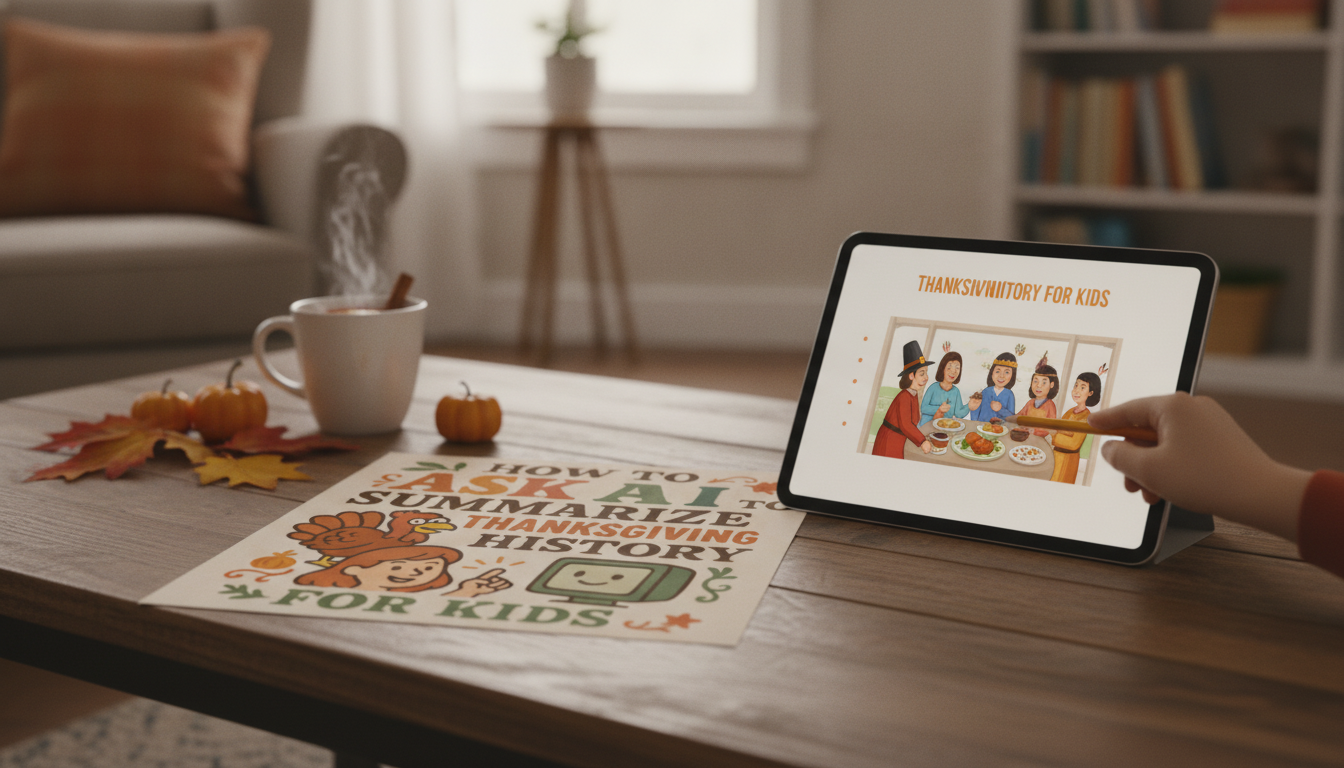
Thanksgiving history can be meaningful for kids when it’s clear, age-appropriate, and honest. With an AI chat tool, parents and teachers can quickly generate a simple summary, discussion questions, and classroom-ready activities—then refine them to keep the story accurate, balanced, and respectful. The goal isn’t to “perfect” every detail; it’s to share what historians know, explain what’s uncertain, and remind children that Indigenous nations are living communities today.
For quick fact-checking and kid-facing background, reputable references include Plimoth Patuxet Museums, Smithsonian Magazine, and Encyclopaedia Britannica.
Use these question sets as a starting point and adjust the word count, reading level, and classroom needs.
| Age/Grade | What to ask for | Helpful constraints |
|---|---|---|
| K–1 | A 5–7 sentence story about a harvest gathering, with kind, simple words and one big idea about gratitude and sharing. | Max 120 words; no graphic details; 3 simple vocabulary words. |
| 2–3 | A short summary that names Pilgrims and Wampanoag, explains “harvest,” and ends with 2 discussion questions. | 150–220 words; short paragraphs; include a “what we know/what we’re unsure about” sentence. |
| 4–5 | A balanced summary that includes cooperation and later conflict, plus a timeline with 4 dates/events. | 250–350 words; neutral tone; include 5 vocabulary words with kid-friendly definitions. |
| 6–8 | A more detailed overview that distinguishes 1621 from later holiday traditions, with a short source list for fact-checking. | 350–500 words; include perspectives; include 3 “think deeper” questions. |
If you want a ready-to-use plan you can follow the same way each year, the Thanksgiving history checklist digital download lays out the steps in a simple, printable format—audience, length, tone, perspectives, and verification—plus copy-ready question starters by age.
For families who want to slow the pace and make room for reading and conversation, pair the lesson with the Family Calm Night Rituals Checklist. A calm routine helps kids absorb sensitive history without feeling rushed, especially during a busy holiday week.
And if you’re using a phone, tablet, or laptop for reading aloud or classroom projection, keeping devices charged can prevent last-minute stress. The 65W GaN USB C Fast Wall Charger with Quick Charge is a practical add-on for home or school setups.
This can be adjusted from early elementary through middle school by changing word count, reading level, and how much historical context you include. The age-based question sets make it easy to match the summary and activities to your child or class.
Use short, clear summaries that acknowledge multiple perspectives and include one present-day Indigenous connection. Avoid stereotypes, keep details age-appropriate, and use reflection questions to help kids process what they learn.
No—it’s a digital file that can be viewed and printed from common devices using a standard PDF viewer and a printer (if you want a paper copy). It can also be used alongside any AI chat tool.



Leave a comment