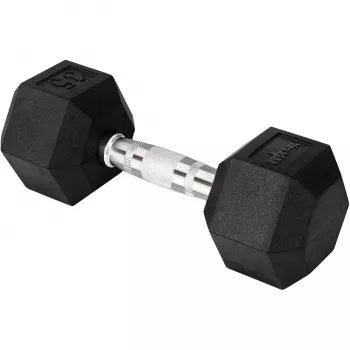
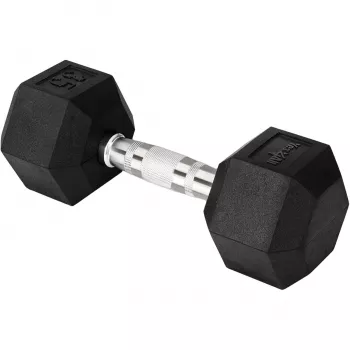
A chrome grip hex dumbbell is a compact, floor-friendly strength tool designed for stable set-downs and confident handling. The hex shape helps prevent rolling, while the chrome grip supports secure control during presses, rows, carries, and core moves at home or in a commercial setting. If training space is limited (or workouts move quickly from one exercise to the next), the “set it down and it stays put” advantage is a small feature that makes sessions feel smoother and safer.
Hex dumbbells are built for practicality: the flat faces make them easier to place on the floor and easier to work with during ground-based movements.
That anti-roll stability becomes especially useful during unilateral training where one hand is bracing and the other is moving—think plank drags or renegade row holds—because a stable “base” reduces wasted energy and helps keep positions clean.
A chrome grip is typically chosen for a smooth, durable surface that cleans easily after training. It tends to look sharp over time, and a quick wipe-down can remove sweat and residue that might otherwise build up on textured handles.
If hands sweat easily, keep a small towel nearby and prioritize controlled reps over rushing. A steady tempo also helps maintain grip without “white-knuckling” every set.
Before adding a dumbbell to your setup, it helps to match the hardware to the way you actually train—your most-used movements, your flooring, and how you like to progress.
| Movement type | What to prioritize | Typical approach |
|---|---|---|
| Pressing (floor press, shoulder press) | Control and range of motion | Choose a weight that allows 6–12 clean reps without bouncing |
| Pulling (one-arm row, chest-supported row) | Stable bracing and grip endurance | Often 1–2 steps heavier than pressing movements |
| Lower body (goblet squat, RDL) | Comfortable hold and secure grip | Moderate-to-heavy load with perfect posture |
| Carries (suitcase/farmer carry) | Handle comfort and anti-slip control | Go heavy enough to challenge posture for 20–60 seconds |
| Core/plank work (renegade row holds) | Non-roll stability | Use a lighter weight to keep hips square |
A single well-chosen dumbbell can cover strength, muscle-building, and conditioning with minimal equipment. Rotate through basic patterns—push, pull, squat/hinge, carry, and brace—to build balanced sessions.
For general health guidelines and well-rounded programming, review reputable standards like the CDC Physical Activity Guidelines and the ACSM resistance training recommendations.
| Day | Main lifts | Sets × reps | Rest |
|---|---|---|---|
| Day 1 | Goblet squat, floor press, one-arm row | 3–4 × 6–10 | 60–120 sec |
| Day 2 | Split squat, shoulder press, RDL | 3–4 × 8–12 | 60–90 sec |
| Day 3 | Thruster/push press, carries | 6–10 rounds (short sets) | 30–60 sec |
The hex heads help prevent the dumbbell from rolling, which makes set-downs safer and keeps transitions faster between exercises. It’s especially helpful for floor-based moves like renegade rows and push-up variations where a stable base matters.
Pick a weight based on the movements you’ll do most: presses usually require less load than rows, hinges, or carries. Aim for a weight that allows clean, controlled reps in your target range and increase gradually as form stays consistent.
They can feel slick when hands are sweaty because chrome is typically smoother than deeply textured handles. Keeping the handle clean, using a towel between sets, and staying within controlled rep ranges helps maintain grip and confidence.



Leave a comment