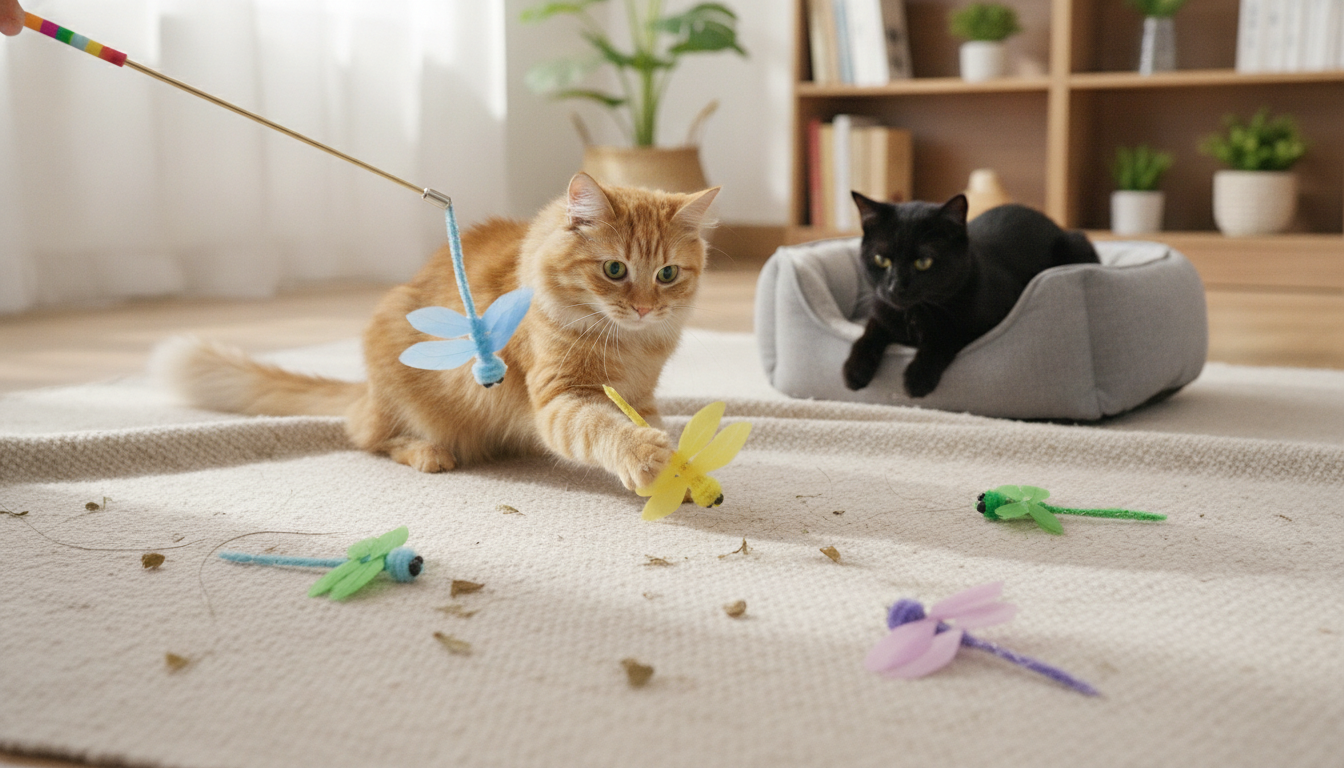
Cats can lose interest when a wand toy starts looking (and moving) the same every day. Swapping in lightweight feather dragonfly heads adds new flutter, sound, and unpredictability—often the quickest way to re-engage stalking, pouncing, and chasing. This set of four replacement heads is made for easy refreshes to compatible teaser wands and interactive play sessions. For more guidance, see Approved Material – Educational Theatre Association.
Replacement heads are a simple way to revive a favorite wand toy without starting from scratch. The dragonfly style is especially popular because it’s airy, fluttery, and easy to animate with small wrist movements—perfect for short, intense “hunt” bursts. For further reading, see 16Pcs Cat Wand Toy Refills – Assorted Plush Caterpillar ….
If you’re ready to refresh your wand toy, you can find the set here: 4pcs Feather Dragonfly Cat Teaser Replacement Heads – Interactive Pet Toys.
Many cats ignore toys that move in predictable lines. Dragonfly-style feather lures tend to “misbehave” in the best way—fluttering, drifting, and changing direction with tiny motions—so the toy feels more like a living target than a dangling string.
For additional guidance on keeping indoor cats mentally and physically engaged, the AVMA’s overview of enrichment is a helpful reference: Environmental enrichment for cats (AVMA).
Most wand toys look similar, but the connector hardware can vary a lot. A quick check now saves frustration later—especially if you’re hoping to swap heads mid-session without fiddling around.
| What to check | Why it matters | Simple test at home |
|---|---|---|
| Connector type (clasp/loop/screw) | Prevents slipping or detaching mid-play | Compare to the existing attachment point on the wand |
| Swivel present | Reduces tangles and line stress | Spin the lure—line should not coil tightly |
| Line strength | Avoids snapping during strong pounces | Light tug test; replace frayed line |
| Cat’s play style | Some cats bite and bunny-kick harder than others | Observe whether the current lure gets shredded quickly |
A new lure helps, but the “prey performance” matters just as much. The best sessions feel like a tiny hunt: sneak, chase, capture, and a satisfying finish.
If you notice your cat getting overstimulated—hard biting, growling, or swatting at hands—slow the lure down and increase distance. The ASPCA has practical behavior pointers that can help keep play constructive: Cats and play: tips for safe, effective interactive play (ASPCA).
Feather toys can be high value for cats, which also means they get worn out faster. A fast inspection before each round is usually all it takes to keep things safe and extend the life of each head.
Practical routine: keep one head “in rotation,” and store the others in a small container or drawer. That small bit of scarcity can make the lure feel new again.
Fit depends on your wand’s connector style (clip, loop, or screw-in) and the connector size. Check your current attachment point and, if possible, use a swivel clasp for easier swapping and fewer tangles.
They’re intended for supervised interactive play, not unsupervised chewing. Inspect the lure before each session, store it out of reach afterward, and remove it if your cat starts eating feathers or string.
Replace them when feathers shed heavily, string frays, connectors bend, or any parts loosen enough to become a choking hazard. Rotating multiple heads can help each one last longer while keeping play feeling new.




Leave a comment