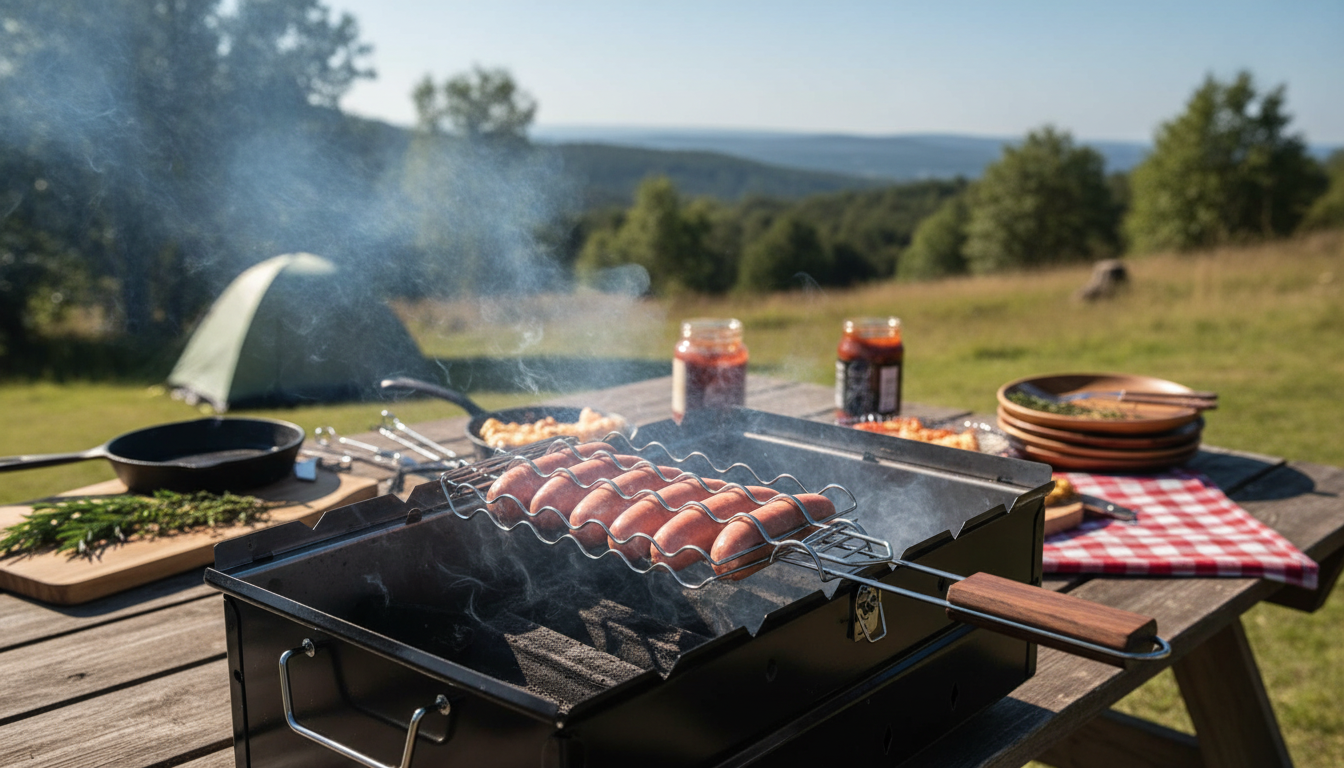
A grilling basket helps keep smaller foods secure over open flames while making flipping and serving easier. This stainless steel basket with a wooden handle is designed for backyard grills and camp setups where control, heat, and cleanup matter—especially when you’re cooking mixed batches like veggies and shrimp that don’t belong between the grates.
What a Grilling Basket Solves at the Grill or Campsite
- Keeps diced vegetables, shrimp, sliced mushrooms, and other small items from falling through grates
- Makes turning a mixed batch faster than flipping individual pieces
- Helps reduce sticking by keeping delicate foods supported and easy to lift
- Supports more even cooking by allowing quick shake-and-turn motions
- Simplifies transferring cooked food from heat to a plate or tray
On a busy grill, the difference is simple: instead of chasing runaway onions or losing shrimp to the coals, everything stays contained, cooks more predictably, and moves off the heat in one controlled pour.
Stainless Steel + Wooden Handle: Practical Advantages
- Stainless steel body is suited for high-heat cooking and resists rust with proper drying after washing
- Perforated/mesh-style basket walls promote airflow and smoke contact while holding food in place
- Wooden handle provides a cooler gripping surface compared with all-metal tools (still use caution near direct flame)
- Handle length helps keep hands farther from heat, useful for fire pits, charcoal grills, and camp stoves
- Works well for quick-turn foods like veggies, wings, and mixed kebab-style cuts
For camp cooking, the handle matters as much as the basket. A longer, easier grip makes it simpler to stir and reposition food when your “kitchen” is a small grate over a fire ring.
Best Foods to Cook in a Basket (and How to Prep Them)
- Vegetables: Cut into similar sizes; lightly oil and season to prevent drying.
- Seafood: Shrimp and scallops cook quickly—preheat the basket so they sear instead of steam.
- Chicken wings or bite-size chicken: Pat dry, season, and cook over medium heat to avoid flare-ups.
- Sliced sausage, fajita strips, and mixed skewering ingredients: Keep thickness consistent for even doneness.
- Delicate items (fish cubes, tofu): Use a light coat of oil and avoid overfilling so pieces can move.
A simple prep habit that pays off: dry wet ingredients (especially chicken and shrimp) before seasoning. Less surface moisture leads to better browning and fewer stuck-on spots.
How to Use It for Cleaner Flips and Fewer Sticking Problems
- Preheat the basket for a minute or two so food sears on contact.
- Lightly oil the basket (or toss food in oil) rather than over-oiling the grill.
- Avoid overcrowding; a single layer cooks more evenly and is easier to turn.
- Turn in short intervals: shake, flip, or stir to prevent hot spots over coals.
- For sugary sauces, glaze late in cooking to reduce burning and sticking.
If you’re cooking over charcoal or a campfire, create a two-zone setup when possible: a hotter side for quick browning and a slightly cooler side to finish thicker pieces without scorching.
Feature Guide: What Each Detail Does
A grilling basket works best when it’s easy to control with one hand and sturdy enough to handle repeated tosses. Here’s how the key details translate into everyday use.
Basket Features and Everyday Benefits
| Feature |
Why it matters |
Best used for |
| Stainless steel basket |
Handles high heat and cleans up well when dried after washing |
Charcoal grills, gas grills, campfire cooking |
| Ventilated sides/base |
Promotes airflow for browning while keeping food contained |
Veggies, shrimp, sliced meats |
| Wooden handle |
More comfortable grip and less heat transfer than bare metal |
Extended cooking, frequent flipping |
| Contained cooking area |
Reduces dropped pieces and makes tossing/turning faster |
Mixed batches and small-cut ingredients |
Care, Cleaning, and Storage
- Let the basket cool, then soak briefly if food is stuck; use a non-abrasive scrubber to protect the finish.
- Dry thoroughly after washing to reduce the chance of surface spotting.
- Avoid prolonged soaking of the wooden handle; wipe and air-dry instead.
- For stubborn residue, warm water with mild dish soap works well; avoid harsh chemicals that can affect food-contact surfaces.
- Store in a dry place; if packing for camping, keep it in a bag or wrap to protect other gear from grease.
Safety Notes for Grilling and Camp Cooking
- Use heat-resistant gloves when working close to direct flame, even with a wooden handle.
- Cook poultry to a safe internal temperature and use a food thermometer (see the USDA safe minimum internal temperature chart).
- Prevent cross-contamination by keeping raw and cooked foods on separate trays (basic guidance from the CDC food safety resource).
- Manage flare-ups by trimming excess fat and keeping a cooler zone on the grill.
- Keep the handle away from direct flame to prevent scorching.
In-Stock Picks for BBQ & Camp Setup
FAQ
Can a grilling basket be used on a campfire?
Yes, as long as it sits securely on a grate or stable surface over the fire. Keep the wooden handle away from direct flames and use gloves so you can control turns safely.
How do you keep food from sticking in a grilling basket?
Preheat the basket briefly, use a light coat of oil on the basket or food, and avoid sugary sauces until the end. Leaving space between pieces also helps food brown and release more cleanly.
Is stainless steel safe for cooking at high heat?
Food-grade stainless steel is commonly used for cookware and grill tools at high temperatures. Stop using it if it becomes badly warped, cracked, or damaged in a way that affects safe handling.
Recommended for you





Leave a comment