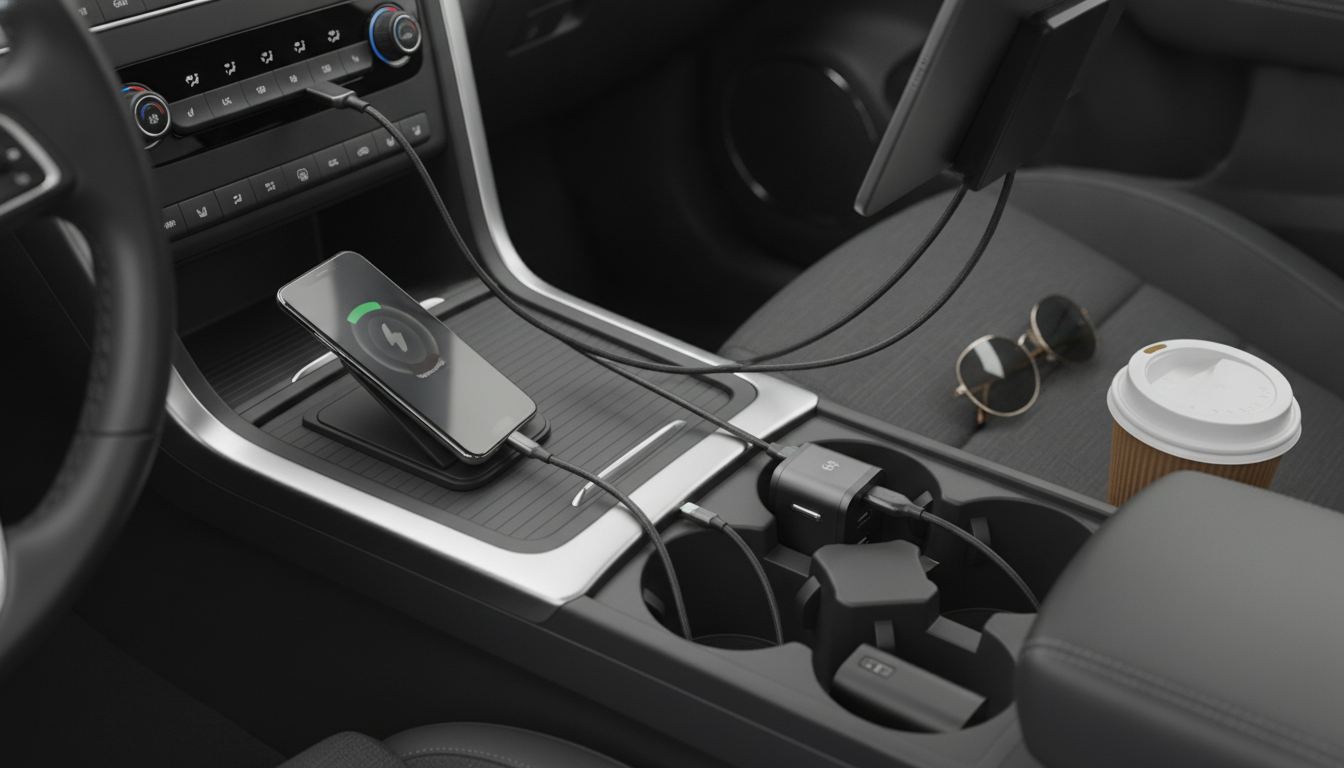
The “best” USB-C car charger usually comes from brands that consistently deliver high real-world wattage, safe thermal performance, and smart port sharing. In practice, that tends to mean established charging specialists (and a few reputable accessory makers) rather than no-name listings. The top manufacturers typically build around modern USB-C Power Delivery (PD) controllers, include proper over-current/over-temperature protection, and publish clear specs for how power is split when multiple devices are plugged in.
The best makers prioritize three things: (1) dependable PD output (including higher tiers like 100W+ when appropriate), (2) robust heat management in a tight car socket environment, and (3) honest labeling of single-port vs. multi-port performance. A charger can advertise “high wattage,” but the best brands back it up with stable charging on demanding devices like laptops, tablets, and fast-charge phones.
Serious USB-C car chargers stand out when more than one person is charging at once. The best manufacturers design intelligent power allocation so one device doesn’t drag everything down, and they use sturdy housings and better internal components to handle sustained load without overheating. If you want a single solution for family road trips, rideshare driving, or powering a work laptop on the go, choosing a maker that specializes in high-watt, multi-port designs can make a noticeable difference.
Rather than chasing a logo alone, pick the “best” by matching your needs to proven features: enough wattage for your largest device, the right mix of USB-C (and USB-A if needed), and a design that’s convenient day to day. For a deeper breakdown of what separates premium options—especially if you’re considering a high-output, multi-port model—see the complete guide here: 240W 4-port USB-C car charger guide.
For phones, 20W–30W is usually plenty; for tablets, 30W–45W is common. If you want to charge a laptop reliably, look for 65W–100W (or more), depending on your device’s requirements.





Leave a comment